
This is one of the most common questions we’re asked, and it’s a really sensible one to ask before you start – so let’s talk through it honestly.
The short answer
For most straightforward under stairs storage – cupboards, drawers, shelving, pull-out racks – you generally won’t need to apply for Building Regulations approval, because you’re not altering the structure of the staircase itself or creating a new habitable room. You’re simply fitting joinery into an existing void. anything we do to your staircase will always be to meet current building regs – Imogen studies them and is a stickler for the rules!
Where things change is if you’re doing anything that affects fire safety, structural elements, or escape routes – for example, if the under stairs space houses your gas meter or boiler, or if you’re converting the space into something like a downstairs WC or a habitable room. In those cases, building control involvement is far more likely, and it’s always worth checking with your local authority or a building control officer before work begins.
(We’re joiners, not building control officers – this is general guidance based on what we typically see, not a legal opinion on your specific project. Always check with your local authority if you’re in any doubt.)
Why this matters more than people expect
We mention this so often because we’ve seen a genuinely worrying trend doing the rounds on Pinterest and Instagram: storage built directly into the stair treads and risers themselves, with a drawer front on the front of each step.
We want to be really clear about this one: we won’t design or build this, and we’d strongly advise against it, on both safety and structural grounds.
Stair treads and risers aren’t decorative – they’re part of what keeps the staircase structurally sound. Cutting into them to fit drawers can weaken that structure significantly over time, and it’s exactly the kind of alteration that would raise real concerns under Building Regulations, since staircases are subject to specific safety requirements around structural integrity and safe means of escape.
There’s also a much simpler, everyday risk: a drawer left even slightly open on a step you walk up and down multiple times a day, often in low light or when you’re in a rush. It’s a trip hazard waiting to happen, and it’s not something we’d want fitted in our own home, let alone build for someone else’s.
Building storage the right way
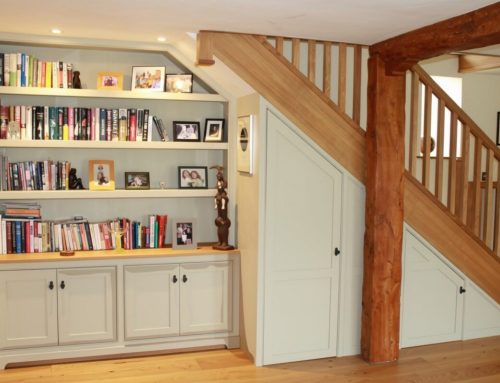
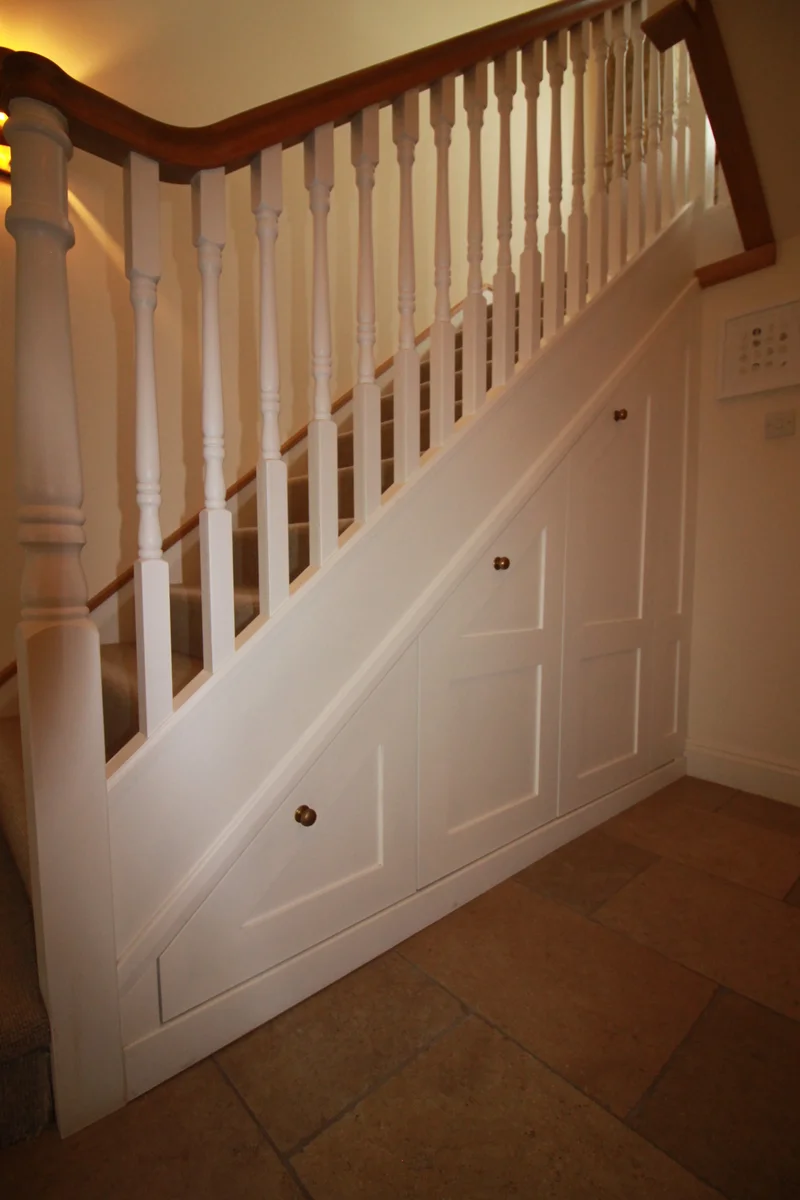
None of this means under stairs storage is complicated to get right – it just means it should be built into the void beside or beneath the stairs, not into the stairs themselves. Cupboards, drawer units, pull-out racks, and even a bookcase front that swings open to reveal hidden storage all achieve that same sense of clever, tucked-away storage without touching the structure of the staircase.
If you’re ever unsure whether an idea you’ve seen online is actually safe or buildable, that’s exactly the kind of question we’re happy to talk through – better to ask before you fall in love with a Pinterest photo than after.
Getting started
If you’d like an honest opinion on what’s possible (and safe) for your space, send us a few photos and rough measurements and we’ll talk you through it and ping you out a quote.
Planning under stairs storage in Dorset, Wiltshire, Somerset, Hampshire or London? Get in touch for a free quote from photos of your space.

A Carpenter’s Wife Blog
Nick and I share a passion for creativity and design. We have renovated several houses together and as I was regularly drafted in to help with his carpentry work. It was a natural step to go into business together. For many years this was an informal arrangement with me learning on my feet, including CAD, web design, tax and admin. I was itching to get involved practically so it wasn’t long before I joined Nick on-site.
We’re very lucky to enjoy our time working together. My blog is a reflection on what we are doing, what we have learnt and where we are going. It’s nice to keep a written record of our journey together and life in Dorset with three young children.